

Author Archives: cissnewsletter
Safe and Secure Relationships – Part 3 of 3

Creating Safe and Secure Relationships in early learning environments results in children who are confident and curious to learn, more able to problem solve and have increased levels of frustration tolerance. Safe and Secure Relationships are essential and are the foundation in reducing behavioural challenges in all age groups. When a child is treated with empathy, they gain a sense of belonging that leads to positive relationships and optimal learning. Further, when children are treated with empathy they learn how to be empathetic towards others. Continue reading

Get to know the CISS Team!
Hey! See Ya Later S.M.A.R.T. Goals!
Five MOORE MINUTES with Shelley Moore
www.fivemooreminutes.com
Nap Time Bins
 At La Coccinelle au coeur d’Ottawa, we noticed that as the number of non-sleeping children increased in our preschool group, we didn’t have enough quiet activities to go around. Additionally, the children were losing interest in the activities available in the playroom. We then came up with the idea of creating an activity storage bin system specifically for nap time.
These activities are chosen based on the following criteria: they are quiet, easy to understand and don’t include many pieces. Here are some examples: stacking, association, serialization games, special books, writing boards and puzzles. Activities can be as simple as a clipboard with white paper and pencils to bring out the children’s creativity. Possibilities are endless! The activities can help the children develop their cognitive and fine motor skills as well as their ability to play in an autonomous manner. Continue reading
Attachment is the Work of Both the Caregiver and the Child
 What is a secure attachment?
A biologically based (innate) connection children feel to their parent or caregiver on whom they rely to help them feel safe, cared for, and protected. Attachment is the deep and lasting connection that children form with the people they depend on for care and protection. The work of attachment does not belong to the child. It involves caregiver as protector and the child needs to feel confident that the caregiver will protect them. Children form different kinds of attachment (e.g. secure or insecure) depending on how well their needs are met.
Different types of attachment:
- Secure attachment – Caregiver reacts quickly and positively to child’s needs-
- Insecure/Avoidant attachment – Caregiver is Unresponsive, uncaring, dismissive
- Insecure/Ambivalent – Caregiver Responds to child inconsistently
- Insecure/Disorganized – Caregiver is abusive or neglectful; responds in frightening or frightened ways

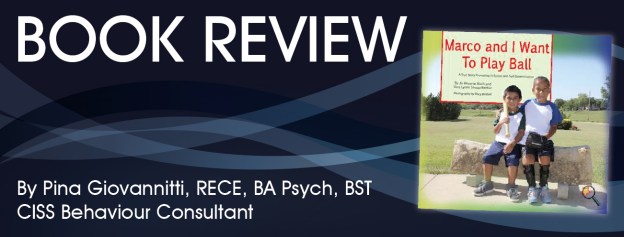
Marco and I Want To Play Ball: A True Story Promoting Inclusion and Self-Determination
Creating More Learning Opportunities for Your Child with Autism – Hanen
 ACCESS Inclusion Newsletter