
 Morning drop off and daily transitions can be stressful for children. In our Kindergarten program we realize that when a child leaves one environment and enters another or separates from their parents they may experience a variety of emotions. We have created a quiet corner to help children collect themselves, regroup and manage their emotions. This space accommodates one child at a time and encourages them to make use of the many quiet and calming activities. Continue reading
Category Archives: Inclusion
How Will You Feed the Joy?
I’m sure there is not a parent among us raising a child with special needs, who does not have forever imprinted on their minds and in their hearts, the day their child was diagnosed. For our little family, it was the virtual blow from a two by four to the gut; the breathless shock to the system; the blood rushing to your face and the feeling that you needed to sink to your knees as some faceless voice uttered “severely autistic”. It’s amazing what power a few little words, quietly spoken, can have on a whole bunch of lives. Then comes the ricochet effect as the power of love for your child sends you hurtling into action as if on a permanent adrenaline rush: therapy, preschool, social programs, interventions, doctors, what program, how many hours, what can we afford, who are the best service providers and how much can we fit into a day? All the while, like an irritating song stuck in your head, the words so many will utter without truly understanding the impact they will have; “there’s a window of opportunity, and then development slows or stops.” Continue reading
The Power of H’Art
H’Art of Ottawa is an innovative and inclusive visual arts studio that supports the creative growth of artists with developmental disabilities. H’Art’s unique art and literacy program promotes creative and cultural experiences, self-expression and independence. In the studio, visual art and creative writing are used as approaches to learning. The artists exhibit, promote and sell their paintings through the studio, galleries and venues within the community. This provides the opportunity to participate in society in a meaningful way and contributes to the growing awareness of the general public that persons with disabilities can live rich, productive and independent lives. Continue reading
Yoga for Children
Tips to Help Teach Children Yoga
The most important things to remember when practicing yoga with children—keep it fun, free and simple! Let your creativity flow and many more good ideas will come.
When working with young children don’t try to make the poses technically “perfect”. At such a young age, the purpose of yoga is to introduce them to, and familiarize them with, the basic concepts of the practice. The essence of yoga is breathing, relaxing, balancing, trying and being good to self and others. Continue reading
Fine Motor Booster Program at Bettye Hyde Co-operative Nursery School
Generations ago children spent the majority of their time outdoors climbing, digging, hanging from trees, running, riding bikes, swinging along with many other body developing activities. Childhood was full of physical activity which developed muscles of the hand to prepare them for school work. Today children can spend the majority of their spare time indoors playing on computers, watching TV and videos and playing video games as early as 2 years old. As a result, it is not uncommon for children’s hand muscles to be immature upon entrance into Kindergarten. Continue reading
Inclusion Ideas Corner – Smooth Transitions
Smooth transitions, whether they are big or small, start with consistency and repetition. Here are some ideas:
• Make up a song for each transition sung to familiar tunes. Consistently sing the same song for each transition. This supports the children to make a link between the song and the expectation of the routine.
• During long wait periods, provide a small bin or basket of hand held toys for the children to choose from while they wait their turn. Continue reading
King Koonto and Jeffrey Make Music
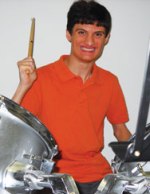
My name is Rory the Cook. I feed everybody at Andrew Fleck Child Care Centre, except on Thursdays, when cowgirl Kathleen steps in for me so I can do other things like make music. I write music for choir and for jazz ensembles, I play drums and percussion with a particular interest in spontaneously improvised music and, occasionally, I teach individual lessons and group classes. I have had the pleasure of leading music workshops for kids at the Featherston Autism Unit and likewise for youth with Autism through the SNAP program run by the City of Ottawa. Continue reading
Where Are They Now: A Parent’s Story
Like all parents, I always wondered how I would react if one day I learned that my child had special needs or suffered from a serious illness. This is what happened to my husband and me, and here is our story.
We are parents of Congolese origin with two young girls who have been developing typically. We also have a son named Kihinda. We began to have concerns about his development when we noticed that at age two, he was not yet putting together two word phrases. Continue reading
Everyone is Welcome at the Table
Pot lucks are a wonderful way to bring people together, to experience new foods, enjoy good conversation, and to make time to connect in otherwise busy lives. At CISS we celebrate important life milestones by organizing pot luck lunches before some of our monthly staff meetings. Prior to these events, information regarding individual dietary needs is identified to assist in the planning of food choices. As any host knows this is the most important step to ensure a successful outcome! Continue reading
Inclusion Ideas Corner – Tactile exploration activity
Here is a multi-sensory activity that can help you meet the various needs of all children in your group while working on language, turn taking and motor skills. This activity could be used during circle or be available for the children during free play.
Find a large box with a lid. Cut a square hole in the side and cover loosely with fabric or paper so that the children can’t see what is in the box but can still reach in. Continue reading
 ACCESS Inclusion Newsletter