Category Archives: Inclusion

Our Breakaway Season

Hockey WP

Freeimages.com / Dave Di Biase

I remember that July day when my husband, Robert, suggested that our 7 year old son Tyler join the local House League Hockey team in September. My heart sank. Since Tyler had a speech-language delay, he faced challenges in communicating at the same level as his peers and making himself understood. Although he had a lot of friends, these frustrations sometimes impacted him socially.  Robert strongly felt that hockey would improve Tyler’s social skills, help him feel like part of a team, and expose him to life experiences like other children his age. I questioned whether it was already a little late for him to start hockey. I then realized that the potential benefits outweighed my worries about whether he would fit in and I gave in. Continue reading

Inclusion Ideas Corner – Getting More Out of Mealtimes

Acorn Early Learning Centre

As Early Childhood Educators, we have an extremely important role when it comes to teaching children self-help skills. Providing opportunities for the children to serve themselves snack, lunch, milk and water is something that we value at Acorn Early Learning Centre.

Each day during lunch, two of the children are picked to be the helpers. Their responsibilities are to wash and set the tables as well as hand out facecloths to each of their peers at the end of lunch.  The children serve themselves both their meals/snacks and pour their milk/water.  Continue reading

Promoting Peer Interactions Amongst School Age Children

When promoting peer interactions, it is important to understand that children at different ages interact differently and the quality of friendships changes as children age. The following are some characteristics of school-agers to keep in mind.IBR

  • Kindergarten and Grade 1 – Will play with anyone.
  • Grade 2 and 3 – Boys and girls avoid each other.
  • Grade 4 – Emergence of ‘best friend’.
  • Grade 5 – Boy groups more solidly established.
  • Grade 6 – Friendships are based on mutual understanding and affection.

Continue reading

Inclusion Ideas Corner – Setting Up Great Physical Spaces for School Age Children

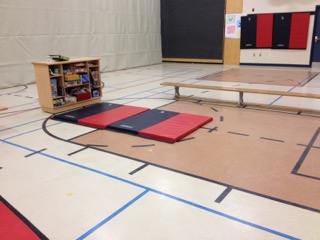
Below are 2 pictures from a school age program that runs out of a gym. They have 5 minutes to set up, and aim to have a quiet area, table top activities and a help yourself bin with a variety of activities that is easy for the children to access. Staff regularly rotate items to keep the children’s interests.
Note: some tables, mats, as well as the small bench as used as a divider. Creative thinking!

1
Floor Toys Continue reading

Building Relationships at Bell’s Corners Cooperative Nursery School

Bell’s Corners Cooperative Nursery School celebrated its 45th anniversary this past June. Over the years we have seen a lot of change but one thing that hasn’t changed is the need to build relationships. As teachers, we strive to build strong and positive relationships with the children in our classes. We have always had strong ties with our families because we are a cooperative. Today we are focused not only on providing a child centered approach, but a family centered approach to early childhood education. Continue reading

Uncertain Beginnings to Endless Possibilities

My daughter Zoe who we fondly call Chip was referred to Children’s Integration Support Services (CISS) when she was around 3 years old. She has a diagnosis of Pervasive Developmental Disorder Not Otherwise Specified (PDD-NOS). She is now a thriving 19 year old young woman who is attending college and lives a busy active life.

The Early Years
Chip started child care at around two years of age. It was there that the staff noticed that she was having some challenges that should be investigated further. Her first diagnosis identified her as being developmentally delayed and I was told she would require full support for her entire life. A second diagnosis identified her as having PDD-NOS. Chip needed a significant amount of support during the preschool and school age years. She had difficulty communicating and became easily frustrated which would often lead to meltdowns. However, I always saw a great deal of potential in her and always pushed her to reach that potential. Continue reading

A Picture is Worth a Thousand Words

We all know the saying “A picture is worth a thousand words”. For those of us in child care, this can be put to use and proven in many ways. Some programs use real pictures to welcome parents/guardians, children and visitors and to remind them that they belong and are valued members of the community. Others use pictures to introduce new toys and equipment and to provide suggestions of how to use them safely and creatively. Dramatic play can be greatly enhanced when real pictures of children using props and play materials are posted. This provides children with examples of how they can incorporate the use of props to extend their play. Pictures can also be used to enhance the daily log, parent/guardian notice boards as well as providing information regarding staff changes and upcoming events. They can be used to track curriculum planning and to document what the children did during the day at child care or while on an outing offsite. In addition, pictures can be used to help the children recall recent events and past experiences and to build the children’s understanding of their community and their world.   Continue reading

Behaviour Guidance Tip – Pairing Positive Reinforcement with a Child’s Name

Did you know the impact of pairing positive reinforcement with a child’s name can;

  • Provide positive attention
  • Enhance self-esteem
  • Build self-confidence
  • Establish a sense of belonging

Toddler Scenario:
The whole family is sitting at the table for dinner.  Charlie is looking at his plate and notices a new food. He pushes his plate away and says; “I don’t want that”. The parent says, “They’re peas, they taste good”. The parent refrains from using Charlie’s name. After Charlie eats the preferred food on his plate, he decides to take a small bite of peas. The parent waits until Charlie tries again and then says with a big smile; “Charlie, you tasted your peas”. Charlie smiles. Continue reading

WANTED: a Voice and a Friend

WANTED....a voice and a friendA mother’s story about the challenge of having a child with Childhood Apraxia of Speech

Voiceless….to have no voice. To be unable to effectively tell others how you feel, what you want or what you are thinking…this is how my 8 year old son feels, each and every day. He’s not silent. He tries so very hard to communicate and we listen. We try to understand and respond. Often, he’s not understood. Not even by us, his loving parents who want so much to connect with him. Many times he just gives up or shrugs and says “I don’t know” when asked a question during a conversation. It’s just too hard for him. My son has Childhood Apraxia of Speech (CAS) and his name is Ewan. Continue reading

Journey of an Active Young Man

Hard to believe Denis recently turned 19 years old. He’s a very happy young man regardless of his challenges such as being non-verbal, and yet he has no problem communicating his wants and needs.

It all started many, many moons ago when Denis was a baby. We knew there were issues but when he finally had his CT Scan at the age of one, they discovered hydrocephalus (an accumulation of fluid within the cranium) and he had a shunt installed within weeks. At 3 years of age, he was diagnosed with Autism and started school on a full-time basis at 3 and a half. That’s when we crossed paths with Children’s Integration Support Services and were matched with an amazing Resource Consultant, Sylvie Giroux, to whom we still send Christmas cards. We were blessed to have her in our lives at that time. Continue reading