Category Archives: Programming Ideas

Inclusion Ideas Corner – Setting Up Great Physical Spaces for School Age Children

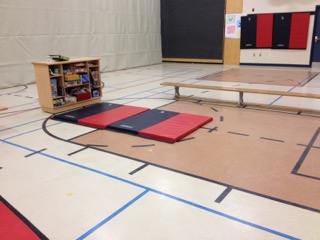
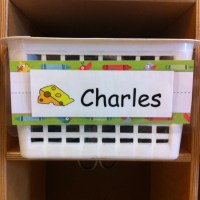
Below are 2 pictures from a school age program that runs out of a gym. They have 5 minutes to set up, and aim to have a quiet area, table top activities and a help yourself bin with a variety of activities that is easy for the children to access. Staff regularly rotate items to keep the children’s interests.
Note: some tables, mats, as well as the small bench as used as a divider. Creative thinking!

1
Floor Toys Continue reading

Time Saver, Cost Saver, Super-Sized Fun Activities

Are you looking for activities that will save you time and money but that are big on fun and learning? Let us introduce the first 3 activities from our newly featured series. All materials for the activities can be found at home or purchased in dollar stores.

NestingNESTING BOXES

Find nesting sets of rectangular, square or circular gift boxes in various patterns and colours. Encourage children to explore; opening and closing, nesting and stacking possibilities and discuss colours and patterns. Continue reading

“Shoe Box” Activities

1“Shoe box” tasks are one unit activities that are designed to teach a child a variety of skills from basic put in/put on tasks, to finger dexterity and eye-hand coordination, bilateral hand skills and pre-academic skills (matching, sorting, patterning, size, shape, colour). The “shoe box” includes all of the materials to complete the task.  As learning progresses, the child learns to complete the task independently including getting the box, bringing it to the table and replacing it when finished. Continue reading

Creating Engaging Outdoor Spaces for Children

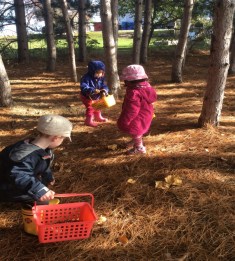
C1As a Registered Early Childhood Educator (RECE), I believe that outdoor play is essential to children. I strive to take the children outside on a daily basis throughout the changing seasons.  Depending on the weather, it can be challenging to keep the children engaged in play. Here are three strategies that I have found helpful to keep the children involved in their time spent outdoors:

1. Interest-Based Activities – Provide children with activities that are of interest to them. Be attentive to the conversations that are happening in the program to further their play based on their changing interests.

2. Provide open-ended material – Think about the purpose of the materials that are being set out and ensure that the materials can be used in a variety of ways. Providing these open-ended materials allows the children to adapt their play and encourages the use of their imagination.

3. Get involved! – The best way to get children engaged in an activity is to participate with them. I model for the children the different ways in which the materials can be used, encouraging them to play.

Continue reading

Fostering Connectedness in your Centre

The Children’s Village at Bridlewood is one of four licensed school age programs operated by the long standing and respected Children’s Village of Ottawa-Carleton. I am the program supervisor and I get to experience the best of both worlds by splitting my time in both the office and on the floor as a team teacher. Our agency takes pride in its programs, the fostering of connectedness between staff, parents, colleagues and most importantly the children. We also value the overall impact of connectedness on learning and behaviour.

A colleague of mine recently brought to my attention a discussion she had with one of our children, a seven year old boy. He had counted the hours he was at school in a day and compared it to how many hours he spent at home with his family. “Miss, did you know I’m at school for ten hours? That is more time than I am with my family and more time than I am asleep”. Educators and operators of before and after-school programs know this realization all too well. For me, working under the motto “It Takes a Village to Raise a Child” means we aren’t just educators, we are a family away from home to these children.

The Children’s Village at Bridlewood 2014-2015

The Children’s Village at Bridlewood 2014-2015

Continue reading

Using Letter Links in a Preschool Program

As parents, we agonize over the selection of a name for our new baby. The sense of personal identity and uniqueness that a name gives is at the heart of why names are so important.

Letter-Links-Pic-PSWP1Letter links are the pairing of a picture with a word that starts with the same letter and sound. Considering that children are naturally attached to and familiar with their own names, it makes perfect sense to begin literacy knowledge here. For example, Kevin might have a picture of a king and Sarah, a strawberry. In choosing the picture for a child’s letter link, remember to match the starting sound, as well as the letter. For example, Isaac could have a picture of ice cream, but an igloo image would not be appropriate (long versus short /i/). Names beginning with double consonant sounds should be considered too; Trevor could be tree, etc.  Continue reading

The Jar of Joy

IMG_20141215_150837225As a way of acknowledging acts of kindness, one child care program uses pompoms. That’s right… pompoms and a Jar of Joy!

First the educator explains the concept of random acts of kindness and introduces the pompoms and the Jar of Joy. Then the group talks about what kinds of things each child could do to receive a pompom to put in the Jar of Joy. They also discuss what fun activities they could do as a group once the Jar of Joy was full. Then the fun begins! Continue reading

A Home Away from Home: the Infant and Toddler Programs at Elizabeth Park Child Care Centre

GCCS2Elizabeth Park Child Care Centre is one of seven child care centres operated by Global Child Care Services. We serve infants, toddlers and preschoolers, and are located in a renovated wing of the Uplands Catholic Elementary School on the CFB Uplands military base. We are surrounded by many playgrounds, walking trails and a water park.

Our Infant and Toddler Programs have been in operation since 1987. These programs are the first stepping stone on a long journey for the children, their families and the staff providing care.

The staff at Elizabeth Park Child Care Centre work hard to create a “home away from home” environment where all families and children feel welcomed and safe. The first initial phone call to parents starts the journey, by providing important information about our programs, and extending an invitation for families to come and visit our centre. Continue reading

Dinner at my Mom’s – Learning about the “You” Statement

I teach a small group of diverse students with various needs. None of the children have formal diagnoses but some of the students are being supported with an Individual Education Plan to work towards specific behavioural goals.

I have recently tried a new key strategy that my Mom shared with me, over dinner, in the classroom; the “you” statements. This strategy has revolutionized the way I think about behaviour management and the needs, wants and feelings of young children in an integrated early learning classroom. I ask myself the following questions regarding the child. Why are they doing what they are doing? What is their motivation? What are they trying to tell me? The “you” statement acknowledges what they are doing or saying as positively as possible. Continue reading

Preparing for Separation Anxiety

September is a very busy time of year especially for educators and providers as they prepare to receive many children. Some will be returning but many will be new. This means many children along with their parents/guardians will experience Separation Anxiety. Here are some considerations to help with this short lived anxiety.

Create a small booklet with pictures of your centre or home child care setting that you can give to parents/guardians so they can read it with their children.
Post and use a visual schedule not only in each classroom or playroom in a provider’s home but also next to the schedule posted for parents/guardians. Continue reading