Category Archives: Book Reviews
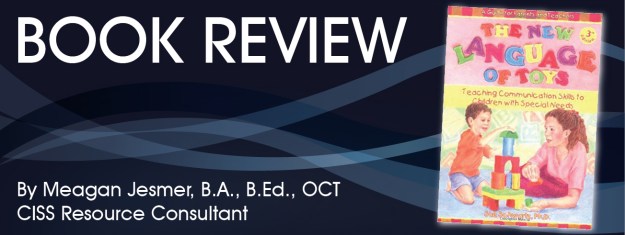

Raising a Sensory Smart Child
Lindsay Biel and Nancy Peske
A winner of the NAPPA Gold Award and iParenting Media award, this book provides a complete analysis of sensory issues and strategies. For caregivers, educators and parents, it is a worthwhile read to better understand the complex nature of sensory disorders. The authors break down the causes of sensory issues and the way that they can interfere with child development and participation in daily activities. Continue reading
Choosing Naia – A Family’s Journey
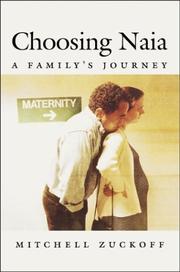 This is a beautifully written book about a family’s most difficult choice during pregnancy. Choosing Naia is a very detailed account of a family’s choice to continue their pregnancy when they are faced with uncertainty. Not only is Naia’s story explained with fear, excitement, and love but many facts about Down Syndrome and the true love it can bring you are shared throughout this read.
Speaking of Apraxia: A Parents’ Guide to Childhood Apraxia of Speech
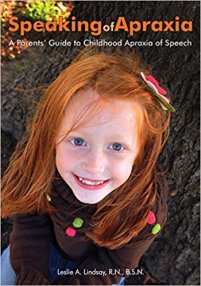 Speaking of Apraxia by Leslie A Lindsay is an easy-to-read comprehensive guide geared towards parents who have a child diagnosed with Apraxia. Apraxia is a motor-speech disorder characterized by difficulty in planning correct speech sounds in the brain and communicating them in the proper sequence to the speech muscles. Written by a parent whose child was diagnosed with Apraxia, this book walks parents through the typical stages of receiving a diagnosis, accessing Speech and Language resources, and transitioning to school. The author uses current research as well as their personal experience to inform the reader without overwhelming them with jargon or professional lingo.
Have You Filled a Bucket Today?
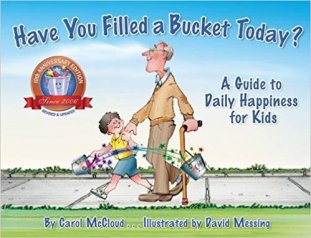 This uplifting book was the winner of 8 Mom’s Choice Awards. It is a great reminder for everyone about the importance of kindness and lifting each other up. I referenced a lot of thoughts and ideas that I had while reading this book during several conversations with educators in school age programs. It made me think about positive group reinforcements for being kind to one another every day. Through conversations with both the educators and children, we came up with an idea to have physical buckets for each child in the program and a big jar of pom poms to put in another child’s bucket when someone noticed them doing something nice for a peer, or just being kind throughout the afternoon. Continue reading

The Reason I Jump

This book is a unique memoir written by Naoki Higashida, a thirteen year old boy with Autism. Naoki is unable to use expressive language to communicate however he has developed the skill of using an alphabet grid to construct sentences. His book allows the reader to enter into his world. He formats the book as a series of questions and answers such as “Why are your facial expressions so limited?” and “Is it true you hate being touched?”. Naoki’s answers are personal; however at times he does use the pronoun “we”. I think it is important for the reader to reflect and not generalize as no two children on the Autism Spectrum are alike. Continue reading
The Big Book of Exclamation
This wonderful book written Teri Kaminski-Peterson, a Speech Language Pathologist explains how you can use a book in many ways. This is not a typical book to read, in fact, there is no written story! It is designed for the reader to interact with children to help develop language skills. The 6 engaging and dynamic scenes contain a description of what you can say and do to encourage the child to interact and mimic sounds, words and gestures. Continue reading

You Can’t Say You Can’t Play by Vivian Gussin Paley explores inclusion and how story-telling and role playing in the classroom can encourage learning and positive social change. It is a reminder of how powerful observing, asking the right questions, and listening to the children we care for can be in our effort to create a space that is inviting for all. The author engages with each grade, Kindergarten through Grade 6 to discuss how they feel about the new rule and to wonder together about how to make it work. Continue reading
 ACCESS Inclusion Newsletter