
You Can’t Say You Can’t Play by Vivian Gussin Paley explores inclusion and how story-telling and role playing in the classroom can encourage learning and positive social change. It is a reminder of how powerful observing, asking the right questions, and listening to the children we care for can be in our effort to create a space that is inviting for all. The author engages with each grade, Kindergarten through Grade 6 to discuss how they feel about the new rule and to wonder together about how to make it work. Continue reading

 Moira D’Aoust has spent her career leading the cause for inclusive access to licensed childcare for children with special needs in the region of Ottawa. Moira’s authentic belief that all children belong in and have the right to quality childcare has positioned her to be a leader not only in the city of Ottawa but as a visionary throughout the province of Ontario. As she prepares to leave Children’s Integration Support Services (CISS), she met with some of her colleagues over a pot of tea and baked goodies to highlight stories of her journey’s challenges and successes as well as her dreams for the future.
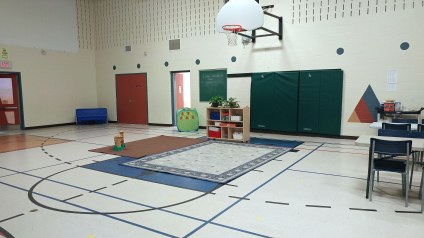 The snack area is purposefully set up by the gym doors, to allow the educator to greet the children and their parents. The construction area is at the centre of the gym, on a large carpet in order to encourage walking feet. There is also lots of room for the children to expand their play and continue adding to their structures.
 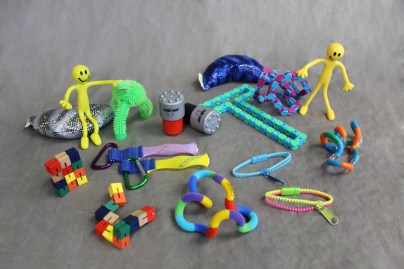 What are fidgets? Fidgets are small toys that have moving parts and/or textures that children can manipulate. They are usually small enough that they can be held easily in the hand. They should also be quiet toys that are not distracting either to the child using them or to other children (or adults) within the area.
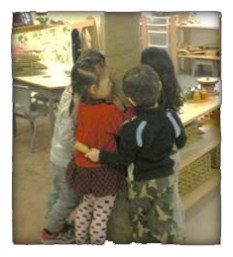 The “Hugging Tree” is a permanent fixture in our preschool classroom. It is the centre of our community time where we express our emotions and share how we are feeling. Social-emotional skills are an important element of preschool and children need to know that they are in a safe place where they can express their emotions and that there are caring adults who can help them understand and deal with their feelings.
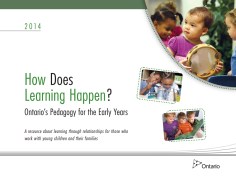 As a RECE and a resource consultant who has worked in the ECE field for more than 30 years, I initially was uninspired by the Ministry of Education’s publication
  ACCESS Inclusion Newsletter