
Category Archives: Families

“Parents Helping Parents” Support Group

Walking in My Shoes (WIMS) is a “parents helping parents” support group for families with children who have a developmental or physical disability.

I started this group in 2009 shortly after I retired. Having worked in the developmental services field for over 30 years as a front line worker, I frequently saw the isolation many parents experienced and heard the frustration due to lack of support and understanding of what they were going through. Though many had caring extended families and friends, a common phrase I heard was, “they don’t understand as they’re not in my shoes.” Continue reading
One More Thing! Solutions for Caregivers Facing Overload and Overwhelm

On a Thursday evening back in January, a panel of female caregivers (Savannah Ross, Shannon Parker, Kim McLeod, Catherine Corey and Julie Drury) gathered to offer their stories and wisdom on how they have coped with care giving. The following are their tips.

1. Get up every day, look outside and smile. Put one foot in front of the other and remember to smile throughout the day. Continue reading

Survival Techniques for Parents/Guardians

  • Organize your life using agendas and calendars.
  • Use resource libraries (e.g. CISS library, CHEO library, particular associations).
  • Use documents such as All About Me of the Ottawa Catholic School Board (OCSB) and Intake Form of the Ottawa Carleton District School Board (OCDSB) to communicate information about what the school board really needs to know about your child when entering school.
  • Register children with Autism with the Ottawa Police registry (www.ottawapolice.ca/autism).   Continue reading

Families of Children with Special Needs: What About the Siblings?

Often parents ask what they can do to make sure that their other children are getting all that they need within the hustle and bustle of a family where the brother or sister has a disability. As with other suggestions about what it takes to do a good job as a parent, it is important to remember that there is no magic formula that works for all families or in all situations. Continue reading

Kadence Then and Now

Kadence began her time at Cornerstone Children’s Centre in the toddler room but moved to a home child care program because her mom felt her behaviours would be better supported in a setting with smaller ratios. She did well there but ultimately Mom wanted her to return to Cornerstone. When she was two and a half years old she joined my preschool room.

When Kadence returned it was apparent right away that she still had a lot of challenges to overcome. Her Mom reported a lot of the same issues at home. Kadence was very quick to react and had a difficult time regulating her emotions and controlling her behaviours. Some behaviours resulted in other children being hurt. She had a difficult time in situations where teachers needed to redirect her and she would have intense and lengthy emotional outbursts. Continue reading

Clothing Rituals: Moving from Season to Season

Does your child have difficulty with change of clothing between seasons e.g. moving from boots to shoes, long sleeves to short, coat to just a tee shirt? This can be a common characteristic in children with Autism and those with sensory processing difficulties. It can be the result of tactile sensitivity; the child is particular about the clothes he wears, finds tags and seams itchy or irritating, may not like having his sleeves pushed up and likes only loose or tight clothing, socks and shoes or bare feet. Continue reading

All Aboard with Robbie

Robbie’s journey began on June 21, 1995. He was born a healthy baby boy, 8 lbs 8 oz with beautiful red hair. It wasn’t too long afterwards that we saw signs that Robbie’s travel through life would have road blocks both developmentally and medically. Robbie was diagnosed at Child Development Services (CHEO) in September 1996. This stop lead Robbie to Infant Stimulation, occupational, speech & physiotherapy as well as Children’s Integration Support Services. Robbie is now a handsome young man with global delays along with various medical concerns. 

Continue reading

The Bead Counter, it Worked for Us

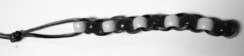
At the Centre éducatif les petits pinceaux, we had a chance to implement several strategies recommended by the behaviour consultant, Jocelyne Desbiens, from Children’s Integration Support Services (CISS) through the Positive Outcomes Program (POP). We implemented the bead counter strategy to support skill development and positive reinforcement of children.

The Concept
The bead counter is a set of beads strung on a thread which slide freely from top to bottom. Each and every time the child moves a bead, he/she is reminded and praised for the desired behaviour.Bead Counter Example Continue reading